

Modify Staircase to Install an Elevator: Everything You Need to Know
Old buildings often present a common challenge: narrow stairs and lack of space to install an elevator. This inconvenience especially affects elderly people or those with reduced mobility, who face daily barriers in their own homes. However, these limitations are no longer an insurmountable obstacle thanks to innovative solutions such as stair modification. This process allows seemingly impossible spaces to be transformed into functional and accessible areas, improving quality of life and increasing property value.
Why modify a staircase to install an elevator?
Have you ever felt that the stairs in your building are an insurmountable barrier? At Elevadores Vilber, we understand that accessibility is more than a luxury: it is a necessity. Modifying a staircase to install an elevator not only removes physical obstacles, but also creates a more comfortable and safe environment for all residents.
Additionally, investing in accessibility benefits the entire community: an elevator increases the value of the apartments and makes them more attractive to future buyers. For people with reduced mobility, this solution means independence and the ability to enjoy their home without limitations.
Nowadays, accessibility regulations and available aids for these renovations make these types of projects more feasible than ever. Stair modification is not just an architectural improvement, but a step towards a more inclusive life.

What does the stair modification process consist of?
Modifying a staircase involves a technical and precise approach. The first step is to conduct a feasibility study to analyze the available dimensions, local regulations, and the building’s structural conditions.
The process may include techniques such as stair shifting, where steps are relocated to free up the necessary space. In some cases, provisional stairs are installed to ensure residents’ safety during the work. The key is to maximize every available centimeter while always respecting safety and accessibility standards.
For example, the minimum dimensions required for the elevator shaft are usually 1 meter wide by 1.25 meters deep, and a passage of at least 80 centimeters must be ensured on the stairs. In buildings with extreme limitations, compact cabins can be implemented that maintain functionality without compromising the structure. For cases where modifying the staircase is not an option, alternatives such as our stairlifts may be the perfect solution to improve accessibility.
Essential regulations and technical requirements
Modifying a staircase to install an elevator is much more than a renovation project. It is a commitment to accessibility, safety, and quality of life for residents. However, for this transformation to be viable and meet all standards, it is crucial to know the essential regulations and technical requirements that govern this type of installation.
Minimum dimensions to ensure accessibility
When we talk about accessibility, every centimeter counts. According to current regulations, the elevator shaft must have minimum dimensions of 1 meter wide by 1.25 meters deep. This space allows the use of wheelchairs and ensures that everyone can use the elevator comfortably and safely. In public buildings, it is also mandatory to leave a free space of at least 1.5 meters in diameter in front of the elevator entrance to facilitate turning for users with reduced mobility.
In cases of buildings with severe architectural limitations, such as old houses, compact cabins can be installed as long as they meet basic functionality and safety requirements. This shows that even in tight spaces, accessibility is possible with adapted solutions.
Requirements for the stairs after modification
Regulations also set the minimum width for stairs after modification. Generally, stairs must be at least 90 centimeters wide. In exceptional situations, and with proper technical justifications, it can be reduced to 80 centimeters, provided that additional safety measures are implemented, such as adequate lighting, visible signage, and fire systems.
These requirements are not just numbers: they are guarantees that residents can continue to use the stairs safely and confidently, even after renovations.
Compliance with local and national regulations
Each autonomous community may have specific regulations related to elevator installation. For example, in some areas, it is mandatory that the materials used in renovations are fireproof or that the building’s aesthetics are preserved in protected areas. Therefore, having experts who know local regulations is essential to avoid setbacks and guarantee project approval by the competent authorities.
Safety at all stages of the project
Safety must be a priority from day one. This includes the use of provisional stairs to ensure residents’ mobility during the work, strict compliance with construction regulations, and the installation of protective systems such as temporary handrails and clear signage.
How does the work affect residents?
Installing an elevator after modifying a staircase may seem like a complex process, but with proper planning, disruptions to residents can be minimized. During the work, safety is a priority. Provisional stairs are usually installed to guarantee access to the apartments, and work is organized during working hours to avoid interruptions at key times of the day.
However, it is important to note that inconveniences such as noise and dust may arise. To mitigate these effects, residents are advised to take precautions, such as closing doors and windows in the areas closest to the work. In specific cases, it is recommended to limit transit during the peak hours of activity.
And what if you need to leave home during the renovations? In most cases, there will always be a safe way to pass through. Specialized companies, such as Elevadores Vilber, are responsible for providing adapted solutions so that the daily life of residents is affected as little as possible.
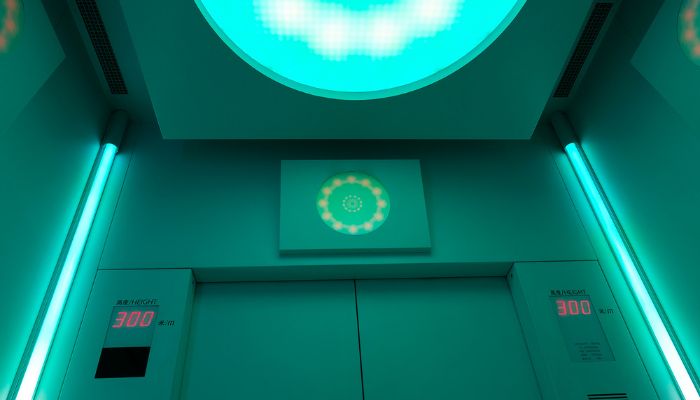
Benefits of installing an elevator after modifying a staircase
Installing an elevator is not just a structural improvement; it is a transformation in the quality of life for residents. For elderly people or those with reduced mobility, it represents a radical change: a building that was previously inaccessible becomes a functional and comfortable space.
In addition to accessibility, elevators increase property value. A community with a well-installed elevator is more attractive to future buyers or tenants, making this investment a shared benefit for all property owners.
Comfort is another key aspect. How many times have you climbed carrying bags or a baby stroller? An elevator eliminates these difficulties, making daily life more practical and efficient.
At Elevadores Vilber, we ensure that every project combines functionality, aesthetics, and safety. If you are considering installing an elevator in your building, contact us. Together, we can transform your space into an accessible and comfortable place for everyone.